Knowledge, organisational knowledge, does not need to be managed. Until it does. And then you are too late. This is a short essay about knowledge bases and how they are not the solution to your knowledge management problems.
Wait! I thought it would be a short essay. But it really is not. Sorry.
Lunch table, walks in the park and the company dog
When you work alone, you don’t have a knowledge management problem. When you work with 5 people, you don’t have a knowledge management problem. When you work with 20 people, you don’t have a knowledge management problem.
When you work with more than 20 people, you have a knowledge management problem. But you don’t notice. Because your most talented employees compensate for it. It doesn’t hurt. You are not aware of it so it doesn’t exist. Sadly, your most talented employees also don’t realise they compensate for bad management. Because they think what they do is “normal, everyone does that”. No.
When you work with more than 40 people, you have a knowledge management problem. And it starts to hurt. It starts to show. The gaps become painfully clear. The talented employees become overloaded and, paradoxically, blamed for the gaps in unmanaged knowledge, instead of encouraged for their behaviour. They get frustrated, they leave or they become apathetic. Meanwhile, the knowledge management problem grows and starts slowing down your organisation.
So you assign the intern with setting up a knowledge base to “ensure everyone has access to key information and critical business process decision accountability responsibilities”. Because announcing “we just have to work more SMART” in the all-staff didn’t fix the knowledge management problem.
When the intern leaves, the “knowledge base” is a half filled wiki, a Slack channel for “x-team collaboration and idea exchange”, a shared drive with stale documents and a broken feedback form where “everyone can drop ideas to share knowledge”. And you still have a knowledge management problem.
Why?
Because knowledge is not something you can print and save and share and everyone is suddenly up to date.
Knowledge is having lunch. Knowledge is a walk in the park. Knowledge is the coffee machine, the company dog. Knowledge, organisational knowledge is not explicit, it’s tacit. Most organisational knowledge is tacit knowledge. And tacit knowledge doesn’t sit in a channel or wiki or disk.
Onboarding is your friend
So, how to manage knowledge then?
Well, I don’t know. But if knowledge is not explicit. If it cannot be saved or extracted or externalised. If it really is tacit. Then it must be in the people and their behaviour and relationships. In the organisation itself. The organisation is the knowledge.
Then that might be a hint that knowledge management is not about documents. It’s about humans and how they behave and relate to each other. You want to encourage knowledge sharing behaviour.
Two ways to do that:
- Define principles that implicitly encourage knowledge sharing;
- Find, encourage and reward your information radiators.
1. Everything gets reviewed
The teacher’s paradox is your friend. We understood that very well at my previous company where we exploited the paradox by defining “Everything gets reviewed” as one of the company’s principles. And I quote (I wrote this in 2018):
Reviewing is about learning, feedback loops, efficiency and also about being ‘one step ahead’. Everything (everything!) improves after having been reviewed. Reviewing code, pitches, proposals, job ads, film scripts website copy has several positive effects:
- Get rid of technical errors like spelling, syntax, grammar, punctuation;
- Improve content;
- Knowledge transfer;
- Create support and shared responsibility;
- Get things done on time.
The last three are usually underestimated, or even overlooked. You often hear the argument that ‘I didn’t have it reviewed, because that saved me a lot of time’. That is a ‘penny wise, pound foolish’ fallacy.
Worked brilliantly. Until somewhere along the line, we forgot about it. It slipped. It choked. It was gone. There was an attempt to reintroduce it. But that failed. It’s still a good principle though.
2.Information radiators
Fix number 2 is finding, recognising and encouraging your information radiators. Everybody knows the information radiators. The person from account management that sits at the “engineering table” during lunch and asks how you are doing and shares what she has been talking to clients about and makes them tick. The person that walks around the office and has a chat with everyone about everything and anything. The engineer that is the only who asks questions during the yearly financials presentation.
Those are the people who share knowledge by default. They don’t know how not to. Find them, encourage them, feed them with information. Have them do lunch presentations, let them go to conferences, let them talk to clients. They will make sure the organisational knowledge is shared.
They will compensate for your information sinks.
The catch: they can be anyone from any team. The financial controller, the engineering team lead, the data science intern, the MT member, the plumber. Anyone. Find them.
To effectively embed these two concepts into your organisation, you need to embed it in your onboarding process. The 30, 60 and 90 day reviews of onboarding (people, process, product) should address the “everything gets reviewed” and “information radiator” issues. Everyone can and will and should be introduced to the “everything gets reviewed” principle during their onboarding. And the same 90 days give you the opportunity to recognise the information radiators and treat them like they should be treated.
Too often, I see onboarding processes in organisations being inconsistent, unstructured and failing on recognising talent.
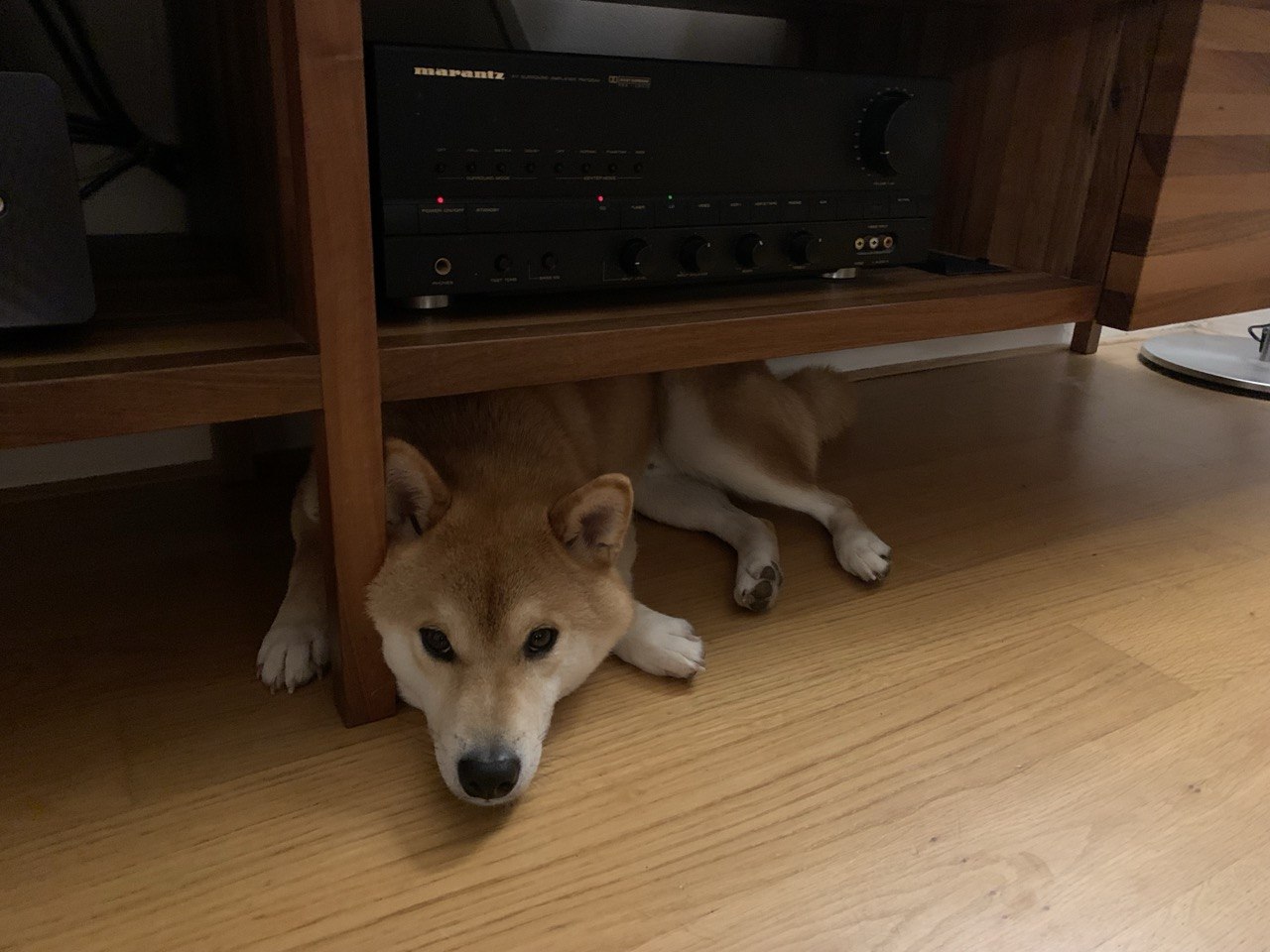 Haru during his onboarding
AI is the enemy of knowledge
“We have a knowledge management problem but no worries, we will fix this with AI.”
No you won’t.
AI will not fix anything for you. AI will exacerbate the problem. Because by using AI to “fix” the knowledge gap, feed the knowledge base, you are implicitly externalising knowledge management. It will look impressive. All documents up to date, everything accessible and queryable and actionable. But your knowledge management problem will not go away. It will still be there. Because the people’s behaviour didn’t change.
AI won’t do your onboarding. AI won’t recognise the information radiators. AI has no clue about tacit knowledge. Human behaviour and relations.
And, slightly off-topic but on-topic really: my friend works for a big engineering consultancy and they hardly hire juniors anymore. Because those tasks can be done by AI agents. A skilled senior engineer with an AI agent army can be super productive, super efficient. You don’t need juniors anymore. So his company really doesn’t hire juniors anymore.
Well, they will fail. In the long run.
Because what happens to the tacit knowledge? What happens to organisational knowledge? What happens with the air between the lines?
It’s gone.
Because there are no more feedback loops through “everything gets reviewed”. The junior doesn’t learn from the senior anymore and thus preserves organisational knowledge. And the seniors won’t have their “rubber ducking” moments anymore.
You replace humans with machines. You lose human behavior and their relations. You lose organisational knowledge.
Wrapping up
Organisational knowledge is not something external. Not something disconnected or existing in and by itself. Organisational knowledge is the organisation itself. It is its people and their behaviour and relations. Managing knowledge means managing people. And managing people is inspiration, encouragement, motivation. Managing people is telling stories.
Managing knowledge is not setting up a knowledge base.