I built and deployed the MVP version of Walter, a quarterly Environmental Supply Chain Risk Radar. It was fun and I learned a lot about skills, MCP, agents, token usage, context, sessions, harnesses, Cloudflare Workers & Pages and AI workflow management.
Product Development & GTM; Skills & MCP
I never coded or designed anything using harness so I did some research on what people are using. The Matt Pocock skills looked promising and they certainly lived up to the hype. I used wayfinder to explore ideas, narrow scope and focus on a first outcome. Then I used the grill-me skills to get rid of ambiguous terms and make clear decisions. The outcome of the skills are documented in my Obsidian vault in a project (I’m using the PARA method). The tasks I manage with Linear.
I did some market research as well using Aaron’s marketing skills to find trends, keywords, search terms (apparently the hype is “Fractional CTO” not “Interim CTO”), SEO & GEO. The SEO and GEO analysis resulted in a nice list of crispy issues, created for me to review in Linear. I then assigned approved issues to sub agents that processed in parallel. It’s very cool to watch issues in the Linear dashboard shifting from “todo” to “in progress” to “in review” and assigned to me all automatically.
- Created an Excalidraw API key and connected to Hermes.
- Setup This Hollow Earth organisation on Github and added WALTER, BERT and CYNTHIA repositories.
- Setup Google Workspace integration and created a shared disk for Hermes.
AI Workflow
While working from hermes with obsidian, git(hub), hugo, html / js, Linear and Telegram, I found the model not always doing exactly what I wanted so I created an AGENTS.md. Things are far more predictable now.
The Hugo AGENTS.md:
* Always work via Linear issue that is in todo, progress to 'in progress' when working on it, progress to 'in review' and assign to arjen when done
* Never push git branches to remote
* Never commit, Arjen will commit after review
* If no issue exists, ask Arjen or create one in Todo first or create it yourself and assign to Arjen
* Never self assign an issue to Donny
* Post the git diff as a comment on the issue
* The theme is PaperMod, a git submodule. Never edit themes/; overrides go in layouts/partials/, e.g. extend_head.html.
That results in a workflow which:
- Supports both Human In The Loop (HITL) and Away From Keyboard (AFK) flows;
- Is agent / human agnostic (both can create issues, both can pick up issues);
- Puts me in control;
- Creates an auditable trace of work (who did what when + evidence).
Wonderful.
I am getting used to Linear and starting to like it a lot. It’s really focused on issues representing a piece of work. Everything around it is in support of that idea and can be discovered progressively (cycles, triage, views, projects). I also really like how every button has its keyboard shortcut displayed on hover. That allows for very quick adoption of using the keyboard to manage issues. Goodbye mouse. (-> Arjen, you really have to buy a mouse for Excalidraw <-).
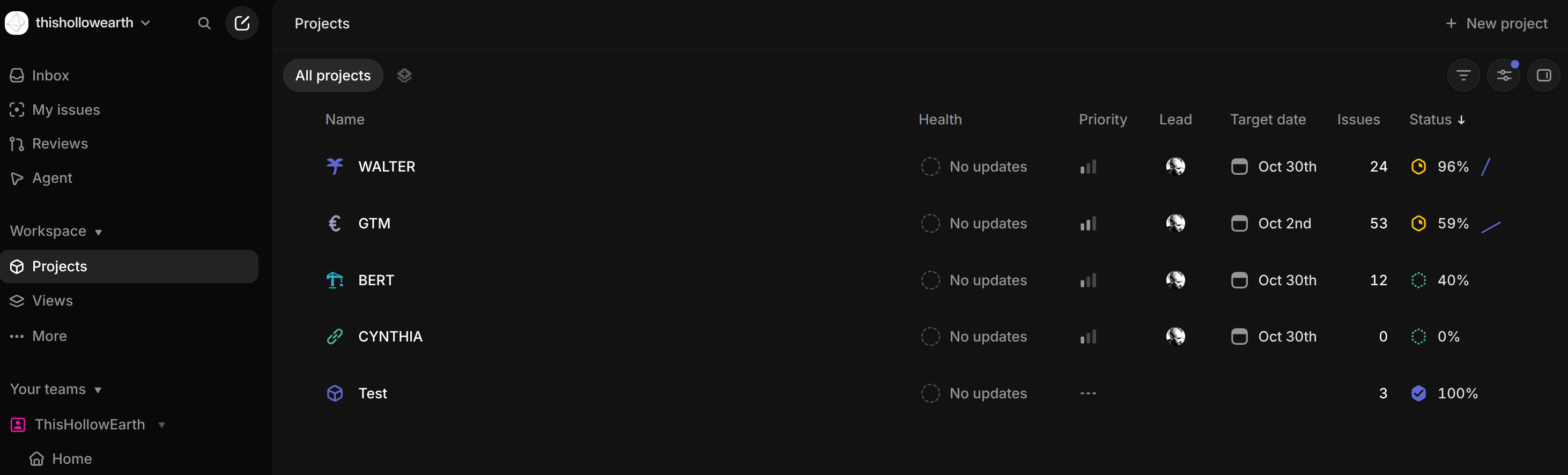 Linear project page
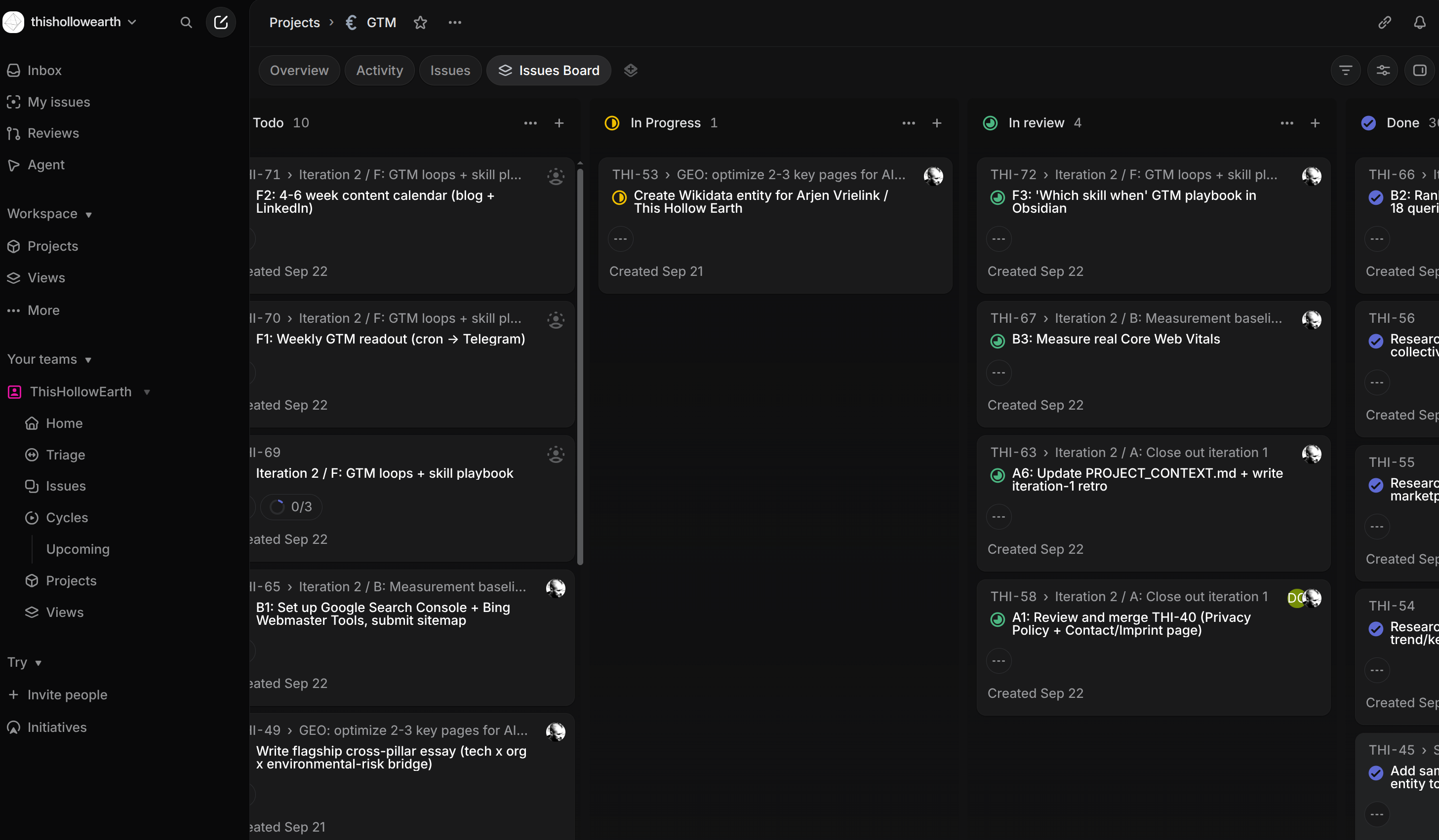 Linear issues dashboard view
Tokens, context, models, sessions
An then I finally ran into the “Oh no! I am out of tokens!” syndrome. Before building (=coding) Walter, I only used Hermes (=Claude) to do research, read and write markdown in my obsidian vault, create Linear issues, brainstorm and concept development with wayfinder and grill-me and some SEO updates on my Hugo site (which is also simpy manipulating markdown files). I never ran into token budget issues.
But when I finished scoping and creating specs for Walter and started building the site (static HTML with a bit of typescript for the interactive parts), my budget evaporated just like that.
That’s when I learned about how sessions build up context that gets shared with the model on every prompt. All fine when doing research or text only simple edits. But with coding you get these trial and error loops building up context size really fast, on top of the already existing context of the brainstorming and wayfinding and grilling. Goodbye token budget.
What I found is a saner way to develop:
- Do the wayfinding, scoping, designing in a single session with a “smart” model like Opus-5.5, save the output in an obsidian project and Linear isssues;
- Design the spec issues from the results of
1.and create them in Linear (with Opus-5.5 or Opus-5 or Sonnet) in another session; - Let a “simpler” model like Sonnet do the actual building, scoped issue by scoped issue in it’s own session again.
That’s not only a good way to control your token budget, it’s also a good way to manage complexity and adds another feedback loop to stay focused.
Walter is live
I am really happy my first mvp is live: walter. I didn’t build it with the idea that this will be a successful product. I built it to learn how to build with AI, how to setup a solid workflow and how to setup automated deployment. In other words: end to end, from idea to production. I did it, it was really fun to do and I am excited about what’s next.
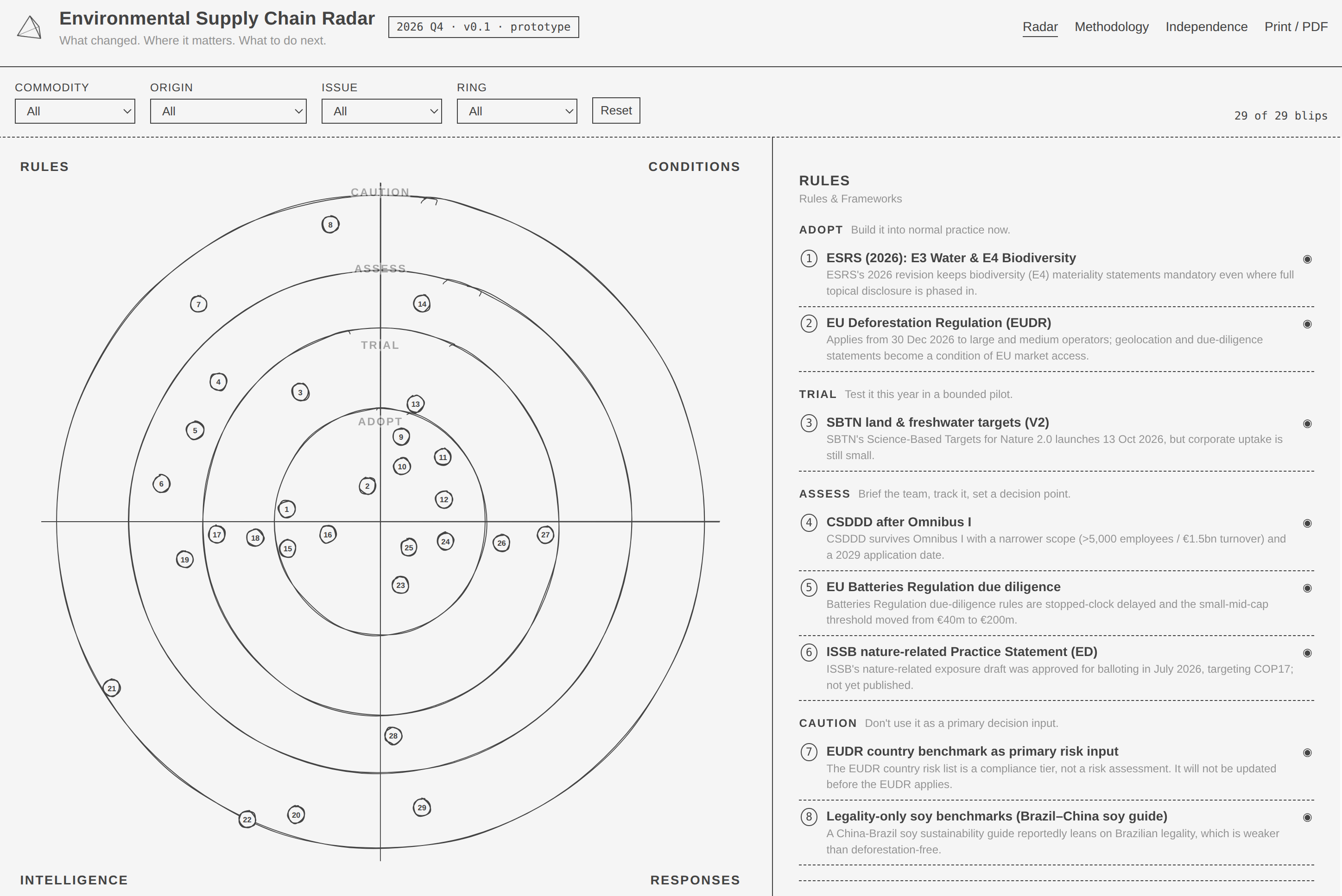 walter
- The code is build on my laptop;
- The code is hosted on Github;
- The site is build, deployed and hosted with CloudFlare Workers & Pages;
- The product page is built with Hugo and hosted on GitLab pages;
- I use roughjs for the sketchy look;
- I use Zalando’s tech radar for the radar.
TODO:
- finish wayfinding and grilling BERT concept;
- Build BERT;
- wayfind and grill the CYNTHIA concept;
- Build CYNTHIA.
Home server
Finally, I got obsessed with having a home server. I MUST have a home server. I am eyeing a refurbished HP EliteDesk or Lenovo ThinkCentre. Small form factor, low power use, solid builds. Perfect for running an always on harness and Immich. Wire it all together with TailScale and we’ll have a very cheap monster setup.
PS: SHIFT-J suddenly came back. Thank you muscle memory.
PPS: I completely forgot I have the famous people like me domain.
TODO:
- build single page site for <www.famouspeoplelikeme.org>.