Conference time.
Two conferences, serendipity, long form essays, the future.
I didn’t go to a lot of conferences the past few years. Let alone speak at conferences. But then I got invited to speak at 2 conferences last spring. Many good things came from both. I made a lot of notes but reviewing them I realised they don’t make much of a coherent story. But who needs coherence? Instead I present you observations, impressions and random thoughts.
AI fun in Stanford
How often do you get invited to speak at an AI conference at one of the worlds top ranked universities, more specifically at their consistently ranked 1st business school?
Never.
Until you do. My friend Dan Iancu kindly invited me to his conference: Sustainable and Responsible Operations in the Age of AI. So I said “yes”.
Immediately, 2 problems emerged:
- If I was going to present something, I needed something to present. And I had no clue what to present.
- I was slightly intimidated by the other speakers in my panel, coming from MIT, Stanford and University of Washington. I would surely be exposed as a fraud and ridiculed and mocked.
Luckily, I got an idea while walking my dog the other day. Last year, I did a presentation to an elementary school class of 12 year olds about satellite monitoring. I decided to take that presentation as a basis; if it’s good enough for kids, it’s good enough for Stanford. Next, I used the conference title as presentation title and used each noun from the title as a section title. Voila, my presentation, hello success.
All went well, I survived the panel discussion and made my way back to my seat. But whereas my little walk up to stage before the panel was a 10 second formality, the way back felt like an Odyssey where I had to overcome challenges, riddles and temptations. For example:
- James Leape, WWF endboss, comes up and starts lecturing me on how it is unethical to work with companies like Cargill, Pepsico or Nestle. I get the reflex, but I don’t believe Dutch uncling is helping the world move forward. It’s great to have an activist stance to raise awareness, put topics on the agenda. But we should realise a new generation is working for those companies now. An motivated, aware and engaged generation who will be the leaders of those companies in 10 or 20 years. I think looking for ways to collaborate yields much more for the planet than only raising your finger.
- A Chinese lady came up and stared at me for a long time. Then she said “Zhang Ziyi is my family”. I said “great”. I never heard of Zhang Ziyi. She said “I never saw a presentation with stills from a Chinese director”. We talked about Chinese cinema, family and startups. Later, I found Zhang Ziyi played in 2046. Thank you serendipity.
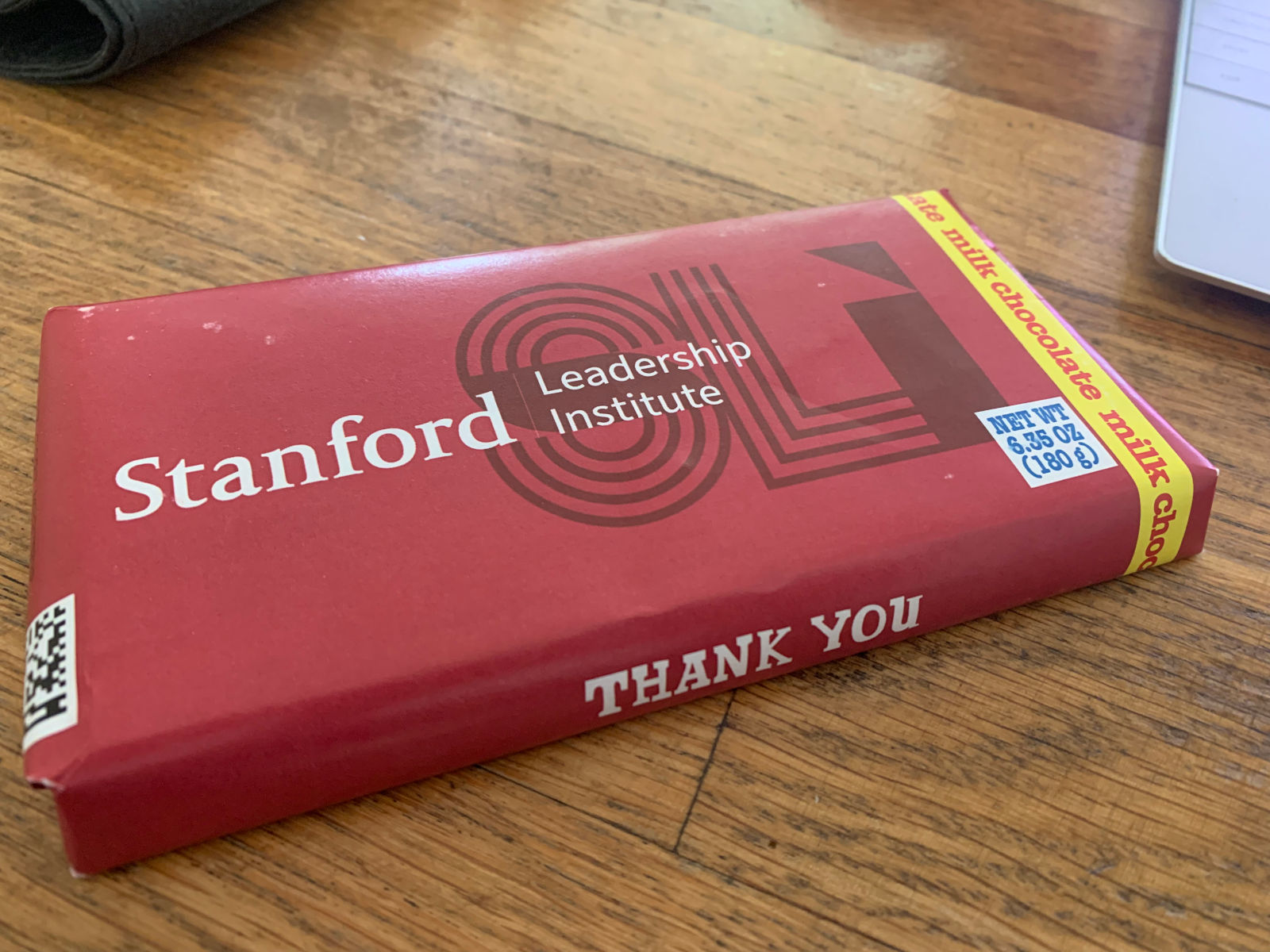 appreciation
Observations
When the average is the noise (eg crowd sourcing ): when a bipolar distribution is polluted by noise and shows up as a Gaussian distribution, the average is actually the worst answer.
Walking around the campus with I found everything is named and sponsored. I get the philantropy but why the naming? Be humble.
The breadth of the conference was really nice, with people from academia and business presenting about AI. There seemed to be a general optimistic, positivist attitude towards AI. Later I thought that must be partially because most people were from a business / economics background where there are many problems that are perfectly suited for AI based solutions (like optimisation problems)
Paradoxes
How some of the smartest minds are so easily impressed (by AI hype and marketing); where is your critical mind, where is your skeptical perspective? Challenge me!
People asked me what I thought about the conference and the presenters and the attendees. I said the conference might as well be subtitled “impostor syndrome gathering”. It was basically really smart people trying to convince other really smart people that they are really not that smart.
Me
- I really like presenting (at conferences, offices, funerals)
- I really like being around thoughtful, curious, open-minded people who are willing to listen seriously without taking themselves too seriously. People that are comfortable with their intelligence.
- Serendipity
Epilogue
Walking back to the car with Dan, we came by his office in the Knight Management Center.
Me: “Knight. Michael Knight?”
Dan: “Yeah, we have his shoes here.”
“…”
 chair
chair
An evening stroll
I was walking my dog the other day when we ran into the cat
“Good morning cat”, I said
“Good morning”, the cat said
“Do you like chicken?”, I asked
“I like chicken”, the cat replied
“Do you like salmon?”, I continued
“I do like salmon”, the cat answered
“Do you like mice?”
“I like mice a lot!”, the cat exclaimed
“Then, why don’t they sell cat food with mice?”
We left the cat puzzled and hungry
OpenGeospatialConsortium fun in Helsinki The night I arrived in Finland, the whole city (and country) was celebrating their jr. World Cup title in ice hockey. Those were not the quiet and calm Fins I remembered from the few months I lived in Helsinki, about 17 years ago.
I came to Helsinki to talk about the operational aspects of implementing TNFD at the OpenGeospatialConsortium technical meeting.
I always thought that these meetings would be too techie, too nerdy. And they are. But since Peter Rably leads the executive team as a CEO, OGC is much more business and commercially oriented. Which is a good thing. The OGC meetings also have an applied track now for example, making it interesting for a much wider audience. I enjoyed the conference a lot.
When I boarded my plane in Amsterdam, I found the dude in the seat next to me working on a GeoBIM presentation. I casually inquired if he was attending the conference. He was.
I picked the conference hotel, assuming the venue would be in the hotel or else, close to the hotel. It wasn’t. The venue was a 30mins car ride away. Fine, there’s Uber. While waiting for my Uber, I saw a nervous Spanish guy in the lobby asking questions to the hotel staff. I guessed he had the same problem as me: venue is far away. I offered to share the Uber. Turns out, the guy was a modeler (“I model the world”), had some bad luck with storms over Europe and only arrived at the hotel at 3:00 in the morning. In his attempt to get a quick shower and some sleep, he accidentally pulled the emergency cord in the hotel bathroom setting off some alarm sound denying him sleep.
While he was explaining all this to me, a big Jordanian living in San Diego happy dude stepped out of the elevator and greeted the Spaniard in recognition. He joined the Uber as well. The next time I saw him was the next nigh at 12:30 in the hotel lobby when he rushed in urging everyone to visit “the island”, only 30 minutes away by ferry. He was contemplating going to Lofoten since he was in the Nordics anyway (“I visited The Philippines and Japan when I was in Korea”). The man really loves islands.
During the taxi ride to the venue, I started to recognise streets and buildings from my time in Finland. I asked the driver if the address was at the research campus. He said yes. The research campus is where my office was located. I started to remember people and names from that time, especially Kristian, a Norwegian I spent many lynch breaks with. I searched my old emails and found our latest exchange from 17 years before. I wrote him a short message to the old address. He replied within 10 minutes. 1 hour later we were having coffee in our old office. 17 years had past but he was still exactly the same person. My faith in life was restored just a little bit.
The conference venue was in “the wooden building”, just across the street of my old research building. A chain of serendipity. Thank you, life.
Coffee is really strong in Finland. I was reminded. Really strong. Good.
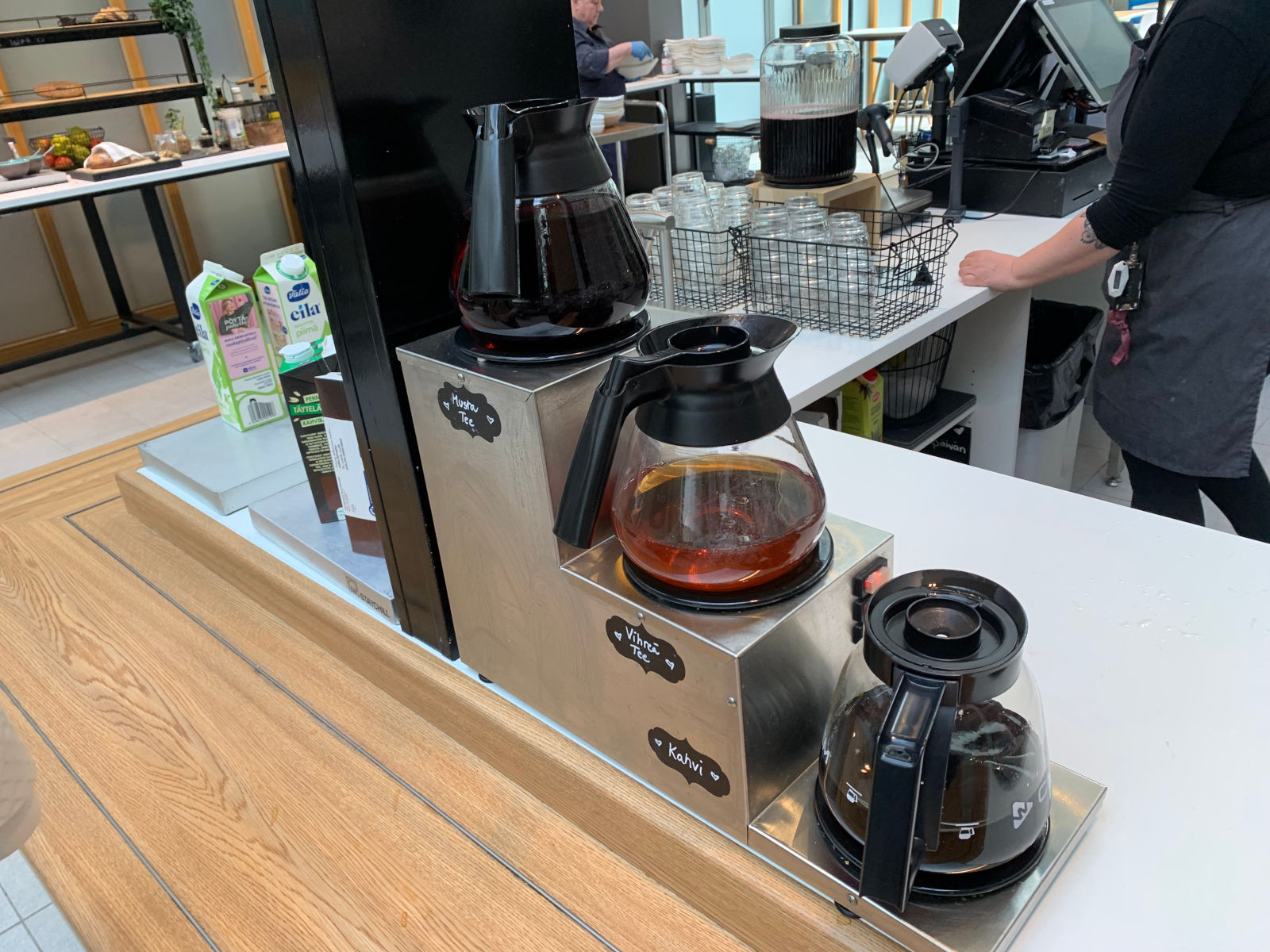 coffee, a beverage liked by Fins
Digital World Models
The most popular topic was digital twins or digital world models. The confusing thing is there are a lot of digital flavours: digital twin. bim (the professor from Wales next to me in the airplane), OGC, world models (the Spanish guy I shared an Uber with) or, supply chain models which, in the end, all point to the same phsyical reality. Some of these models only recently discovered there is a (lacking) geospatial component, so they wrench it in. At some point, there will be convergence: but will there real convergence or simply connectors?
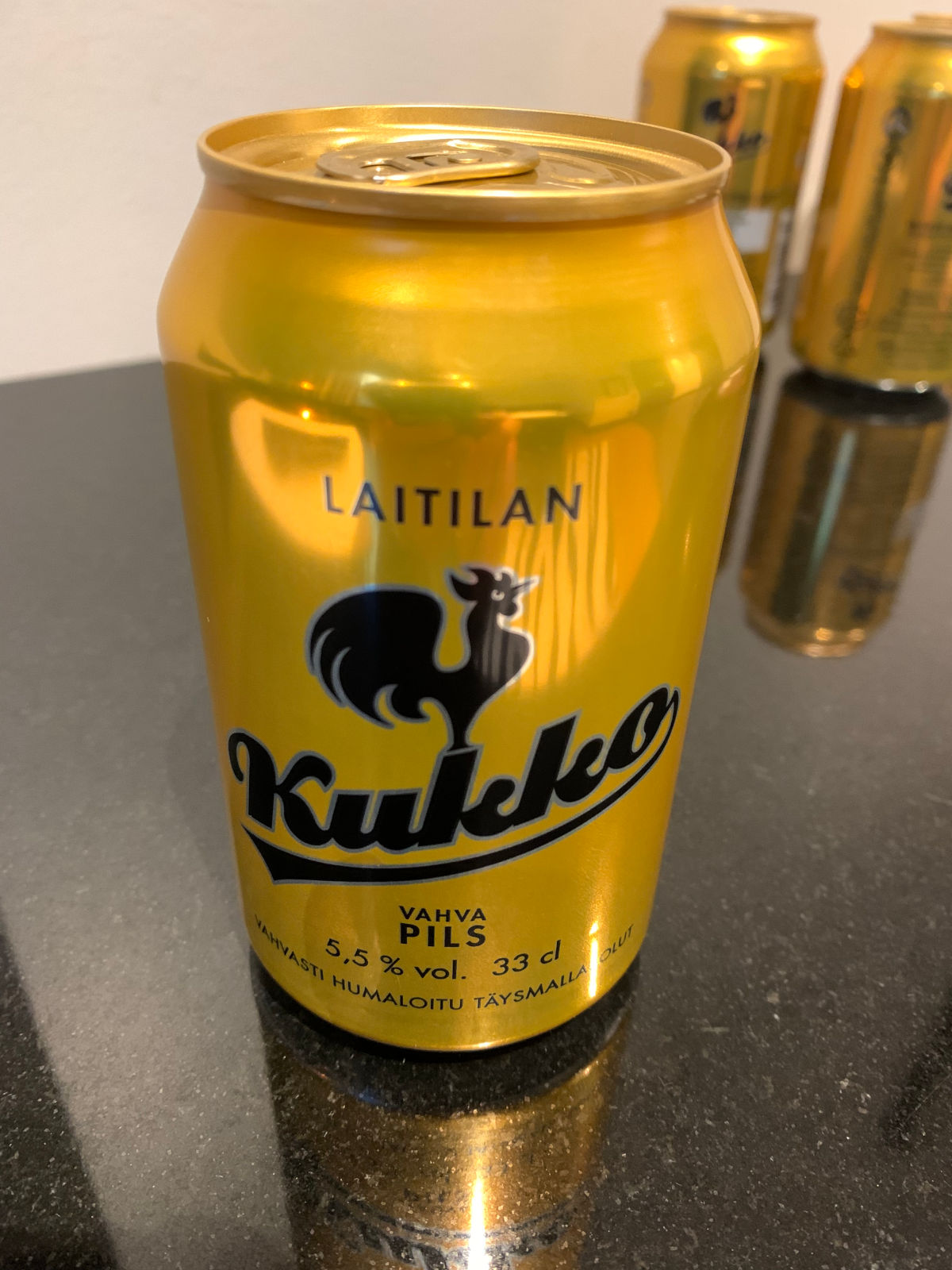 kukko
kukko
Building Blocks
Very interesting: OGC Building blocks: if you can break the problem down to human meaningful components, tooling can build it back up again; define and advocate principles and the complexity will evolve from that.
Geospatial AI, where it hurts
- Jevons paradox, AI is the new excel
- It’s an amplifier, more noise
- Hallucinations
- Probabilistic nature
- Semantics
- The ontology problem in geospatial is orders of magnitudes harder than for organisations
Things I learned
- Racing Santander made it back to the Primera Division
- Have probabilistic systems generate deterministic systems (LLM produces code, code is deterministic)
- From file to service. From central to distributed. From binary to granular. From monolith to modular. Familiar patterns.
- AI will favour people and organisations who have their shit in order
- trust: no one buys your product if they don’t trust it
- Open data can’t be open by default: we need curated exposure. Else we are just adding noise, which doesn’t help in building trust
- Earth Observation should be designed to be compatible, not retrofitted
- The amount of data is irrelevant. Start with the problem since we already have a graveyard of solutions
- Trust as multimodal grounding
- A Digital Twin is only a twin if it interacts with the real world. Else it’s a digital shadow.
Me
- I don’t like group pictures, I’m allergic to groups applauding themselves
- I want to be a conference anthropologist
- No one talks about the hard and boring work
Commercial confs, nerd confs
I started this post with the observation that it had been while for me to go to a conference. That’s not exactly true. I did go to some commercial conferences. Which I liked, since I like almost anything new. But attending the Stanford AI nerd gathering and the OGC geospatial nerd meeting, the difference in atmosphere struck me.
At commercial conferences, it’s really easy to connect to people. Most people are outgoing, open and friendly. But all talk remains superficial blabla. There is no real substance.
At tech conferences, the connections happen rather serendipitiously. But the moment you talk to someone, there is IMMEDIATE, crazy depth. No small talk, no uneasy introductions, no cautious looking for common ground. Just sincere interest and discussions about niche topics.
Random person: “I don’t know you but I have to talk to you, you are interesting”
Me: “… sure!”
The commercial confs feel like real life LinkedIn. The tech confs are where people leave their costume at home. I enjoy both. I’m the same person at both. The interaction and atmosphere are just different.
GTM, Engineering, Product and AI
Thank you people who forwarded their comments and requests and suggestions. GTM and its discontents is the most popular topic.I will write about it. But I will first write the conceptual essay on Consultancy 2 SaaS maturity levels. That gives us a common framework and mental model which we can apply then apply to the GTM and second brain use cases.
Innovation is fast, adoption is slow.
Sneak Peak
- Environmental Supply Chain Risk Radar
- Shift Left Enterprise
- Landscape » Supply Chain » Product
“When is the last time your dashboard made a decision?”
?
Whatever man.
Note to self: please review this post