Today, I wrote nothing.
¯(°_o)/¯
The asymetric nature of change:
- Humans change slow
- The machine changes fast
“The machine” as systems of power (politics, technology, institutions, finance). They are self-reinforcing, self-interested, and largely autonomous from the individuals inside them. A banker, a politician, a programmer; each feels like they are making choices. But the system they inhabit has its own logic, its own momentum. The machine moves, whether or not any individual wills it.
This is what Kafka understood. What Marx was pointing at with capital. What Weber meant by the iron cage. The machine isn’t a conspiracy, it’s an emergent property of coordination at scale.
Humans are structurally slow against all of these. Humans update through experience, grief, conversation, and storytelling. These are slow, lossy, and local processes. Systems of power update through incentives, feedback loops, and compounding, which are fast, efficient, and global. The information asymmetry alone is disabling.
If the machine is any fast-moving system of power, then the asymmetry isn’t a modern problem, it’s a permanent feature of civilization. Every era has its machine. What changes is the speed differential. And right now multiple machines (financial, technological, political) are accelerating simultaneously. That convergence is what makes this moment novel. Not that the asymmetry exists, but that there’s nowhere left where it doesn’t.
The machine produces, but without meaning. It has no interior. It cannot grieve, hesitate, or doubt. It’s hollow, empty. Unintentional.
Therefore, we need story tellers, we need writers, we need poets. Not to describe the gap, not to close the gap, not to fight the asymmetry. But to widen the gap, to deepen the gap, to create space for meaning. Stare into the abyss, preserve interiority, ambiguity, and slowness. Don’t escape it. Occupy the territory the machine cannot enter.
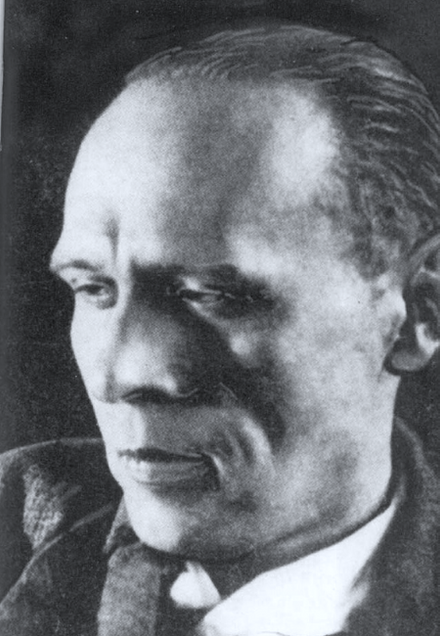
An evening stroll
I was walking my dog the other day when we ran into the dog
“Good morning dog”, I said
“Good morning”, my dog said
Data Rot
AI causes brain rot. If brain rot is what happens to human cognition when fed a diet of low-quality content, data rot is what happens to machine intelligence when fed itself, the slow epistemic decay of AI systems trained on AI-generated outputs, compounding across iterations until the signal is mostly echo. The Jevons paradox drives it: as AI makes data generation cheaper and faster, we produce vastly more of it, but abundance masks degradation. Datasets age, go uncurated, calcify around the assumptions of the moment they were built, and get recycled into the next generation of models as if they were fresh.
The rot compounds because static datasets don’t decay visibly; they just quietly diverge from a world that kept moving, while the models trained on them grow more confident but less accurate, mistaking familiarity for truth. The fix isn’t more data (that accelerates the paradox) it’s curation as a discipline, or curation as a service: living datasets that are actively pruned, dated, contested, and annotated for provenance, combined with models that can express uncertainty about the age and origin of what they know.
The algorithm won’t be the USP (AI will be a commodity) but the quality and quantity of your training data (defining your ontologies) and feature data (dynamic, curated data as the fuel for your AI engine). And someone has to do the curating. This is the wide open gap that is waiting to be filled by companies that can develop a “curation as a service” engine on top of data lakes, repositories, private databases and enterprise file and knowledge systems.
“Ik houd mijn publiek graag (met een beetje humor) een spiegel voor!”
Jos Burgers is our hero. Jos doesn’t sell drills, Jos sells holes.
1-9-5-3-7
When you enter the male toilet area at eg a highway gas station, you see this:
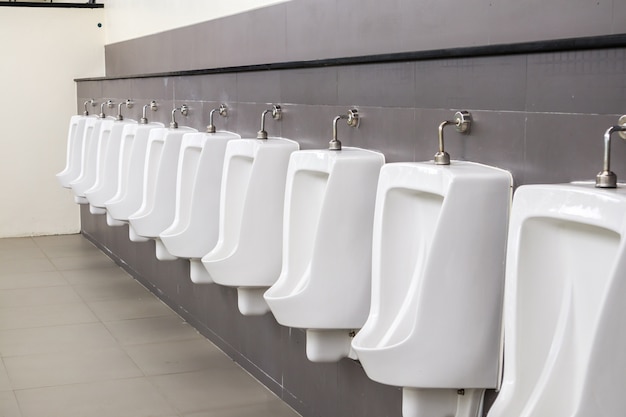
The insight that “privacy is not the same as secrecy” can be felt strongly here as the typical filling pattern is: #1 > #9 > #5 > #3, etc; maximising your private space, in exchange for relief.
When I enter the men’s bathroom at a gas station and I see #1 is occupied, I take #2.
Maximum awareness. Maximum cringe. Maximum uncannyness.
.